


How to organize a D&D Universe in Lore?

The Dungeons & Dragons universe is vast and can feel overwhelming. On top of that, there are hundreds of sub-settings built on the most popular tabletop role-playing system, Dungeons & Dragons 5th Edition.
Keeping everything organized can quickly become a challenge. If you want to structure your D&D universe and focus only on the information that truly matters for your campaigns, Lore, our worldbuilding software, can help.
Why use Lore for a D&D universe?
Lore is a software specifically designed to store and organize tabletop role-playing game worlds. Thanks to its flexible system, it can adapt to any setting, no matter how complex.
You can create a file for the Dragons & Draconis universe, then duplicate it and adapt it for Brancalonia, which is also based on Dungeons & Dragons 5th Edition.
If you also enjoy Cyberpunk, there is no problem either. Simply create a new file in Lore and add all the information you need for that universe and your upcoming campaign.
How to structure a D&D universe in Lore
Thanks to Lore’s template system, you are completely free to organize your Dungeons & Dragons universe however you like.
The retroactive template system allows you to create a template for each type of element and then generate pages based on that template.
To help you get started, here are a few concrete examples.
Cities in D&D
In Dungeons & Dragons, there are many important cities that player characters may visit throughout their adventures.
For this reason, we created a city template that gathers the most essential information for each location.
This includes an image of the city, a short overview of its history, details about its geography, its society, and the religions practiced by its inhabitants.
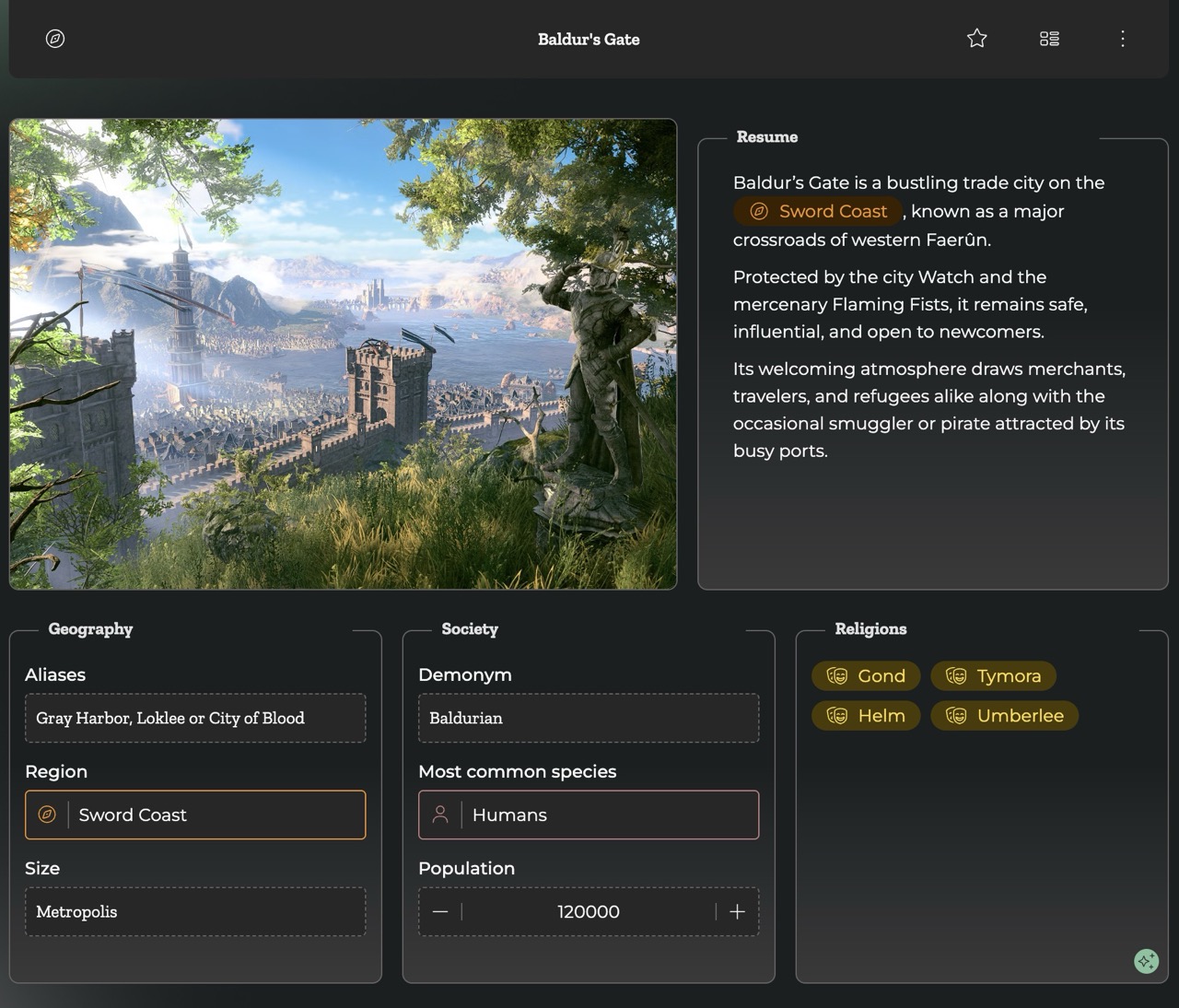
Using this template, we created two major cities in the D&D universe, Baldur’s Gate and Neverwinter, resulting in pages like these.
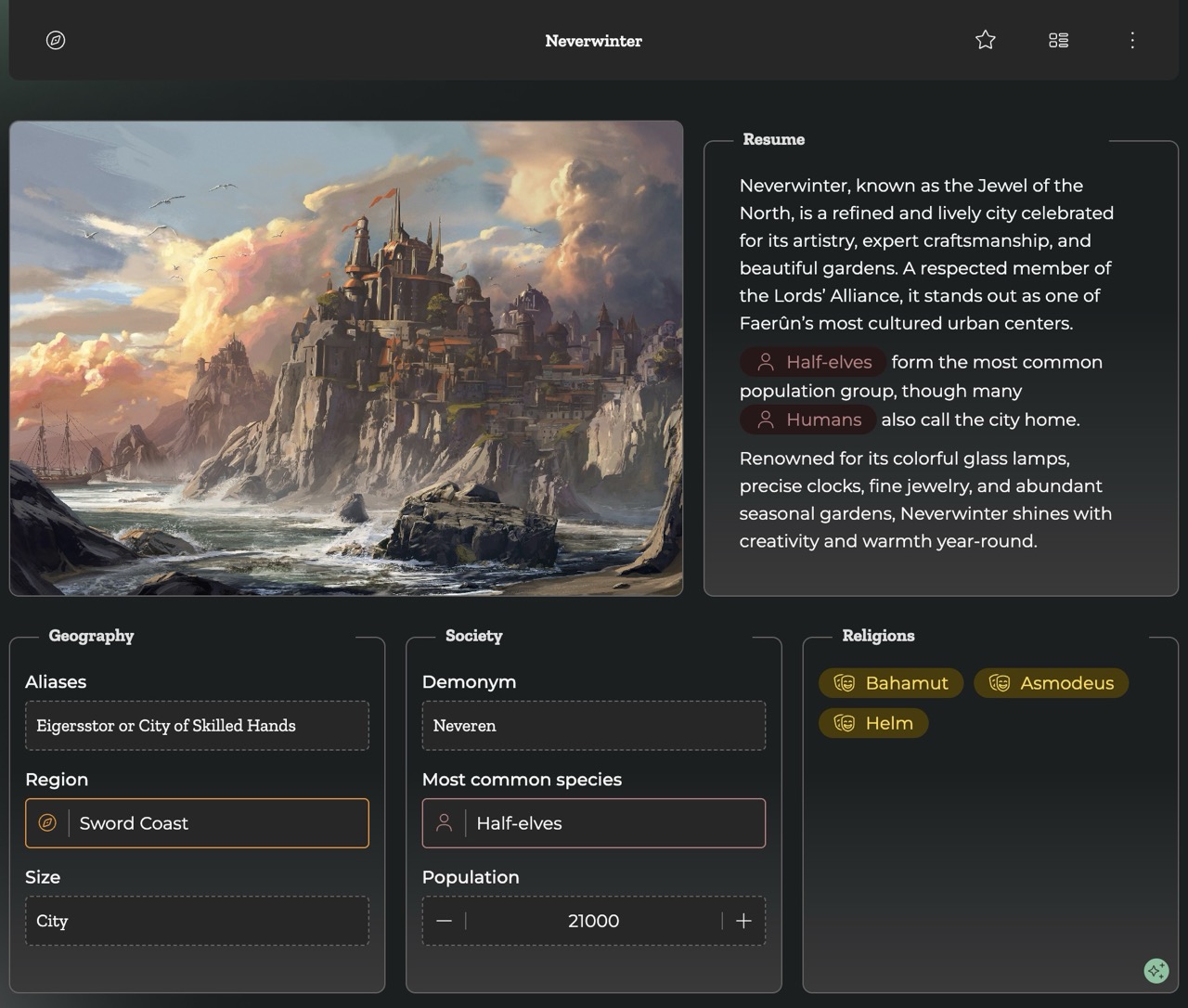
You can, of course, modify the template at any time and reuse it for all the other cities in your setting.
Thanks to the tag system, we have also created links between different pages of the universe, connecting cities to humans, the Sword Coast, and various religions.
Species in D&D
If you are familiar with the Dungeons & Dragons universe, you have probably noticed how many playable species exist and how difficult it can be to remember all of their specific traits.
To make things easier, you can create a species template in Lore that summarizes all the key information.
In our example, the template includes an image of the species, a short description, general information, and a direct link to characters of that species.
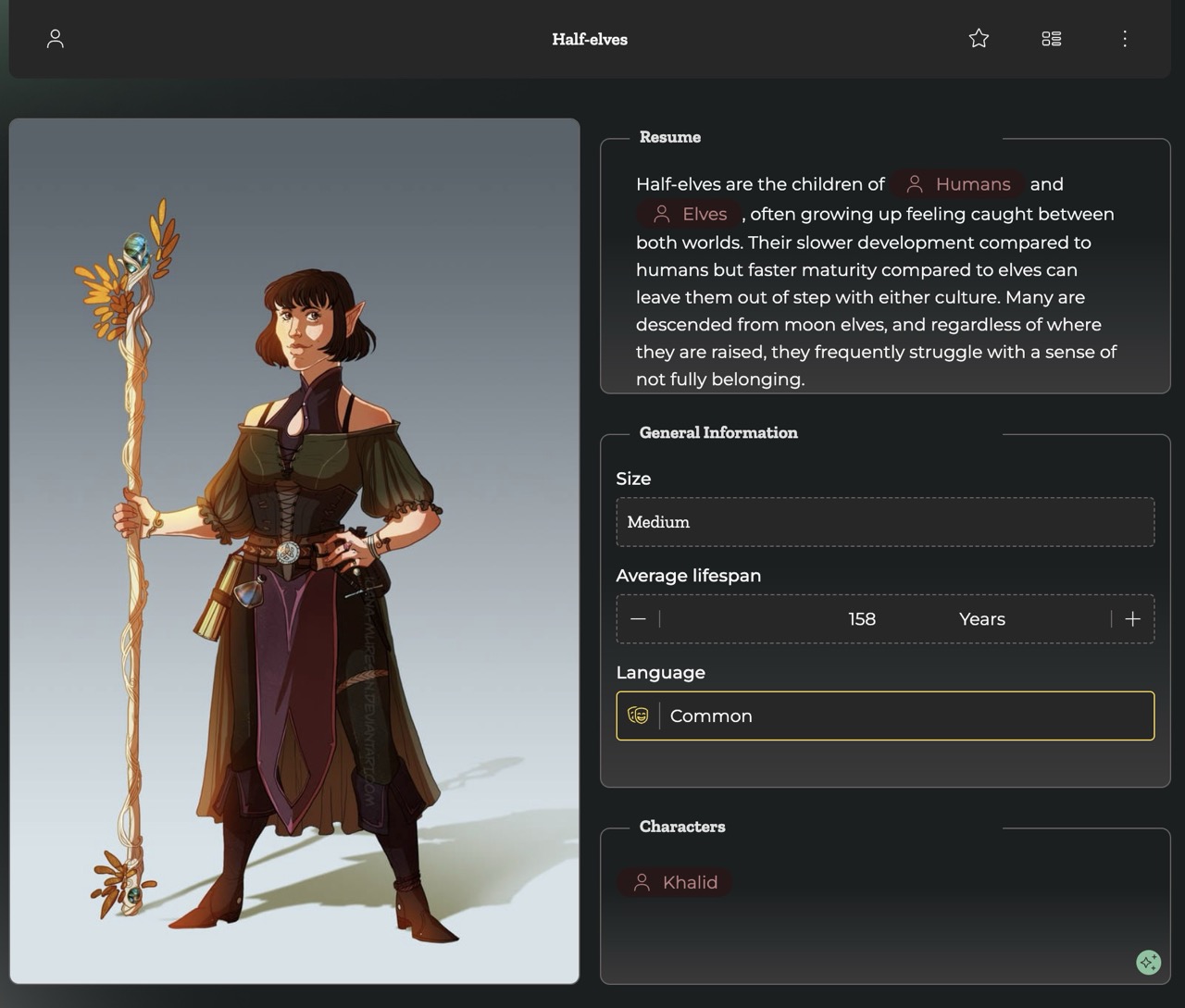
For example, when creating a page for the Half-Elf species, the result might look like this.
Image source used for the Half-Elf
Creatures in D&D
In a Dungeons & Dragons campaign, adventurers will encounter countless creatures. To keep track of all this information, you can create dedicated creature templates in Lore.
Here, we created a template for natural creatures found in the D&D universe. Each page includes an image, a short summary, and general information.
When creating a page for a Dragon, for example, it might look like this.
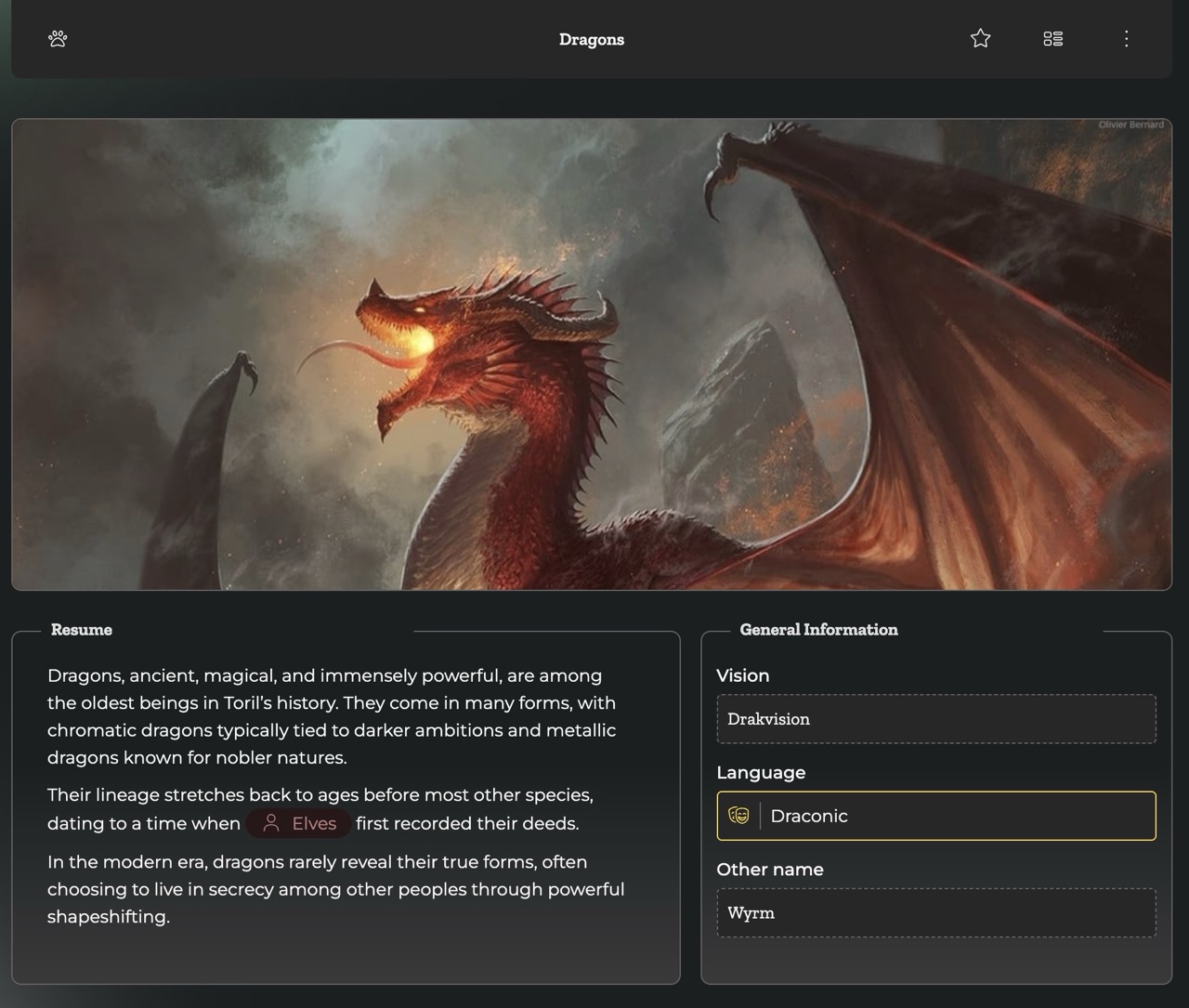
Naturally, you can expand these pages however you like by adding deeper lore, behavioral details, or information about different subspecies.
Bringing it all together
Forgotten Realms is an incredibly rich setting, and you could easily create hundreds or even thousands of pages in Lore.
Thanks to our worldbuilding software, you can keep only the information you truly need and organize it efficiently using templates and tags.
When it comes time to run your campaigns, you can use Tome, our tabletop role-playing game software.
Tome helps you prepare your campaigns and plan your game sessions easily.